
Composure Under Fire
Tim Kelly

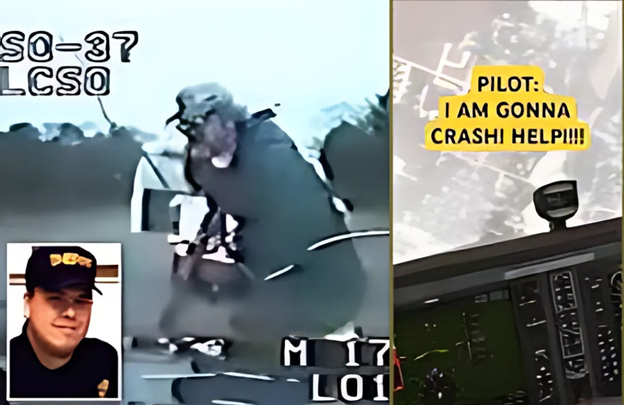
I recently came across a reel of a pilot in distress—his aircraft was in a spin, rapidly losing altitude. You could hear the panic in his voice as he repeatedly called out “Mayday,” seemingly moments away from disaster. In that moment, he wasn’t a pilot anymore—he was a man screaming for help, overwhelmed by fear and the chaos unfolding around him. But then something changed. A calm voice came over the radio and walked him through two basic control inputs. Just two. The moment he heard clear, simple instructions, he began to regain his composure and soon after, control of the aircraft.
That reel reminded me—painfully—of the tragic dashcam footage of Officer Kyle Dinkheller. For those unfamiliar, Dinkheller was a young deputy who lost his life during a traffic stop in 1998. The footage is horrifying. Kyle is heard screaming, panicking as the suspect retrieves a rifle and begins firing. In his final moments, Dinkheller is shouting in terror, unable to regain control of a situation that had spiraled far beyond what he was trained for. No calm voice came through the radio. No one talked him through it. And unlike the pilot, Kyle didn’t survive.
I want to tread lightly here, out of deep respect for Officer Dinkheller and his family. This is not about criticism—it’s about recognition. Recognition that under extreme stress, our training can vanish unless it’s ingrained at a level that allows us to function through panic. Both the pilot and the officer were trained professionals. Both faced life-or-death situations. And both lost composure in moments where composure was their most valuable asset.
The difference? The pilot had someone to guide him back to the basics when he needed it most. Dinkheller was alone.
This comparison isn’t meant to reduce either situation to a training lesson or social media content—it’s meant to spark thought. We don’t rise to the occasion—we fall to the level of our training. And when our training is shallow, sporadic, or outdated, panic can take the wheel. Secondly, it is important for us to realize that no one is coming to save us. It is up to me to save my own life, just like it was up to that pilot and Officer Kyle Dinkheller to save their own lives.
This is why consistent, pressure-tested training is so vital—whether you’re behind the wheel of a patrol car, the stick of an aircraft, walking into a grocery store, or walking into a classroom to teach others how to protect themselves and others. We must not only train the techniques—we must train our minds to access those techniques under pressure.
Composure isn’t a switch you flip. It’s a skill you build. And sometimes, it’s as simple as hearing a calm voice remind you of what you already know. But you have to be ready to hear it, and that voice has to be your own.
Here are the links for the two videos